CHAMPAGNE version
BOTTLE OF CHAMPAGNE
Grand Cru villages
Grand Cru villages
In Champagne, Grand Cru status represents the highest classification of vineyard sites. Historically defined by the “Échelle des Crus” system, it was reserved for villages whose vineyards achieved the maximum quality rating of 100%. Today, there are 17 Grand Cru villages in Champagne. Wines labeled Grand Cru must be made exclusively from grapes grown in these classified villages. This designation reflects exceptional terroir, producing Champagnes of remarkable finesse, intensity, and aging potential.
Here you can explore these villages, which have Grand Cru status, in more detail.
- Select a card to LEARN MORE -
Please note that the order is alphabetical and grouped by Champagne sub-regions, and does not reflect any hierarchy of prestige or quality among the villages.
Here you can explore these villages, which have Grand Cru status, in more detail.
- Select a card to LEARN MORE -
Please note that the order is alphabetical and grouped by Champagne sub-regions, and does not reflect any hierarchy of prestige or quality among the villages.




More products
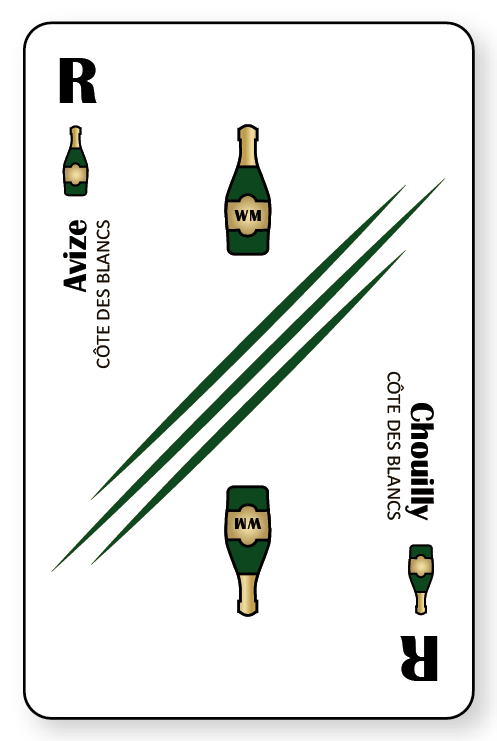
R (Roi / King) -
Avize
Chouilly
Avize
Chouilly
€
€
Avize (Grand Cru, Côte des Blancs)
- Location: In the heart of the Côte des Blancs, between Cramant and Oger.
- Vineyard area: Approximately 370 ha.
- Soil and terroir: Deep chalky and limestone soils, very well-drained, providing minerality and finesse.
- Climate: Temperate continental, moderate sunlight, consistent temperatures favoring even ripening of Chardonnay.
- Wine style: Elegant Chardonnay, high in natural acidity and minerality. Champagnes from Avize are known for their finesse, purity, and aging potential.
- Use in blends: Contributes structure, tension, and elegance; often at the core of prestige cuvées and Blanc de Blancs.
- Notable producers: Salon, Pierre Peters, Jacques Selosse, among other houses and independent growers.
- Location: North of the Côte des Blancs, next to Cuis and Oger.
- Vineyard area: Approximately 325 ha.
- Soil and terroir: Chalky and clay-limestone soils, very well-drained, southeast exposure.
- Climate: Temperate continental with good ventilation reducing disease risk.
- Wine style: Chardonnay with a fuller and rounder profile than Avize, floral and fruity notes (pear, ripe apple), well-balanced between acidity and roundness.
- Use in blends: Often used to bring smoothness and elegance to blends, as well as for vintage and prestige cuvées.
- Notable producers: De Sousa, Bérêche et Fils, and other renowned growers.
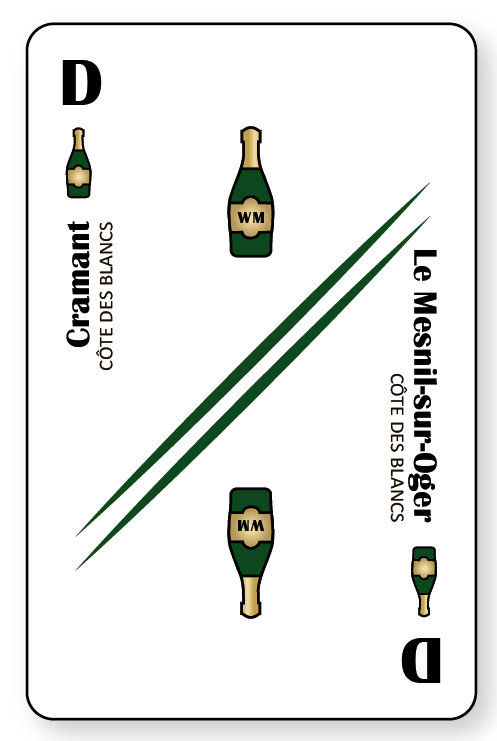
D (Dame / Queen) -
Cramant
Le Mesnil-sur-Oger
Cramant
Le Mesnil-sur-Oger
€
€
Cramant (Grand Cru, Côte des Blancs)
- Location: Between Avize and Chouilly, central Côte des Blancs.
- Vineyard area: Approximately 135 ha, relatively small compared to other Grand Cru villages.
- Soil and terroir: Chalky soils very rich in limestone, providing purity, minerality, and tension to the grapes.
- Climate: Temperate continental, good south/southeast exposures, favoring slow and even ripening.
- Wine style: Very elegant and fine Chardonnay, marked minerality, delicate floral notes, and great aging potential. Wines are often lighter and more refined than those from Avize.
- Use in blends: Ideal for Blanc de Blancs and prestige cuvées seeking finesse and elegance.
- Notable producers: Pierre Peters, Larmandier-Bernier, Diebolt-Vallois.
- Location: Southwestern extremity of the Côte des Blancs, near Oger and Avize.
- Vineyard area: Approximately 320 ha.
- Soil and terroir: Deep, highly permeable chalky soils, predominantly southwest-facing.
- Climate: Temperate continental with mild temperatures, favoring harmonious aromatic development.
- Wine style: Chardonnay of great purity, remarkable tension, finesse, and exceptional minerality. Wines from Le Mesnil are renowned for their aging potential and subtle elegance.
- Use in blends: Often at the heart of Blanc de Blancs and prestige cuvées, providing structure, length, and aromatic complexity.
- Notable producers: Krug (for certain prestige cuvées), Salon, Pierre Péters, Agrapart, among other houses and independent growers.
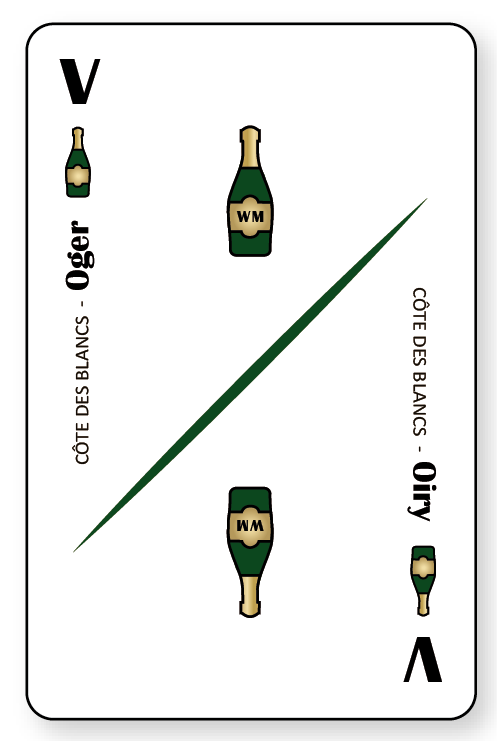
V (Valet / Jack) -
Oger
Oiry
Oger
Oiry
€
€
Oger (Grand Cru, Côte des Blancs)
- Location: Côte des Blancs, near Cramant and Avize.
- Vineyard area: Approximately 180 ha.
- Soil and terroir: Deep, highly draining chalky soils, south/southwest-facing.
- Climate: Temperate continental, moderate winds, favoring even Chardonnay ripening.
- Wine style: Elegant and precise Chardonnay, with finesse, pronounced minerality, and tension. Delicate floral and white fruit notes.
- Use in blends: Core of Blanc de Blancs and prestige cuvées, providing structure and aromatic purity.
- Notable producers: Krug (for certain cuvées), Larmandier-Bernier, and other independent houses.
- Location: South of Épernay, a village in the Côte des Blancs, renowned for its chalky soils and favorable Chardonnay conditions.
- Vineyard area: Approximately 1,076 ha, with a significant portion under vine.
- Soil and terroir: Mainly chalk (limestone), providing excellent drainage and characteristic minerality to the wines.
- Climate: Continental with oceanic influences, favoring slow and steady grape ripening.
- Wine style: Champagnes from Oiry are predominantly Chardonnay-based, elegant, mineral-driven, with fine acidity and remarkable aging potential.
- Use in blends: Oiry Chardonnay is often used in Blanc de Blancs cuvées, contributing finesse, purity, and aromatic complexity.
- Notable producers: Independent growers such as Aurélien Suenen produce exceptional champagnes from this terroir.
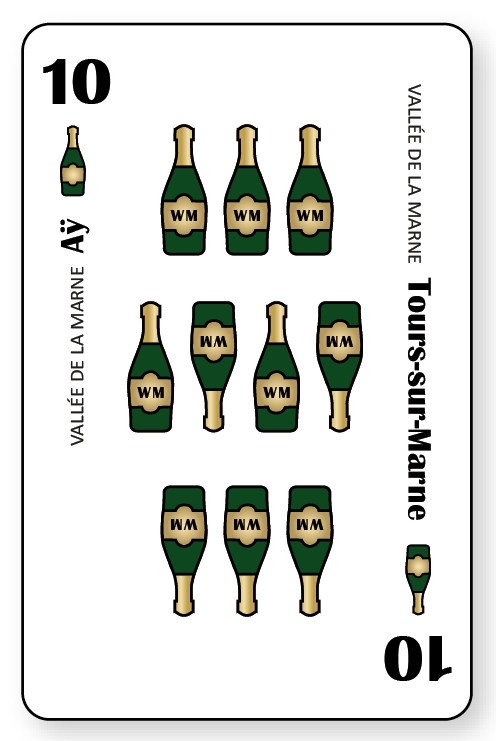
10 - Aÿ
Tours-sur-Marne
Tours-sur-Marne
€
€
Aÿ (Grand Cru, Vallée de la Marne)
- Location: Vallée de la Marne, historic Pinot Noir village.
- Vineyard area: Approximately 230 ha.
- Soil and terroir: Clay, limestone, and flint; deep, fertile soils; south and southeast exposure.
- Climate: Temperate continental with regular breezes, promoting even Pinot Noir ripening.
- Wine style: Powerful and structured Pinot Noir, with ripe red fruit, cherry, and sometimes fine spice notes. Excellent aging potential.
- Use in blends: Contributes body, structure, and complexity, especially in Pinot Noir-dominant blends or prestige cuvées.
- Notable producers: Bollinger, Ayala, Mumm, Philipponnat.
- Location: Vallée de la Marne, near Chouilly and Aÿ.
- Vineyard area: Approximately 120 ha.
- Soil and terroir: Argillaceous limestone with local variations, well-drained.
- Climate: Temperate continental with moderate breezes, southeast exposure.
- Wine style: Structured and fruity Pinot Noir, generally softer and rounder than Aÿ, with red berry and floral notes.
- Use in blends: Often used to add fruitiness, roundness, and accessibility to NV blends and some vintage cuvées.
- Notable producers: Certain independent houses in the Vallée de la Marne, as well as négociants for blends.




More products
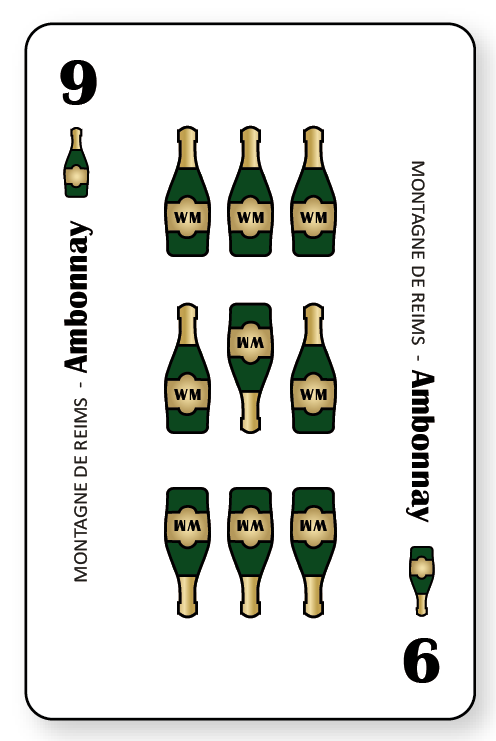
9 - Ambonnay
€
€
Ambonnay (Grand Cru, Montagne de Reims)
- Location: Situated on the southern slope of the Montagne de Reims, Ambonnay is one of the region’s most prestigious villages.
- Vineyard area: Approximately 1,180 ha.
- Soil and terroir: Chalky and limestone soils, promoting excellent drainage and optimal grape ripening.
- Climate: Temperate continental with moderate oceanic influence, allowing slow and even ripening.
- Grape varieties: Primarily Pinot Noir, with a small proportion of Chardonnay.
- Wine style: Powerful and structured Champagnes, with aromas of ripe red fruits, cherry, and raspberry, accompanied by spicy notes and bright acidity.
- Use in blends: Adds richness, complexity, and aging potential to cuvées.
- Notable producers: R.H. Coutier, Marguet, Bérêche & Fils.
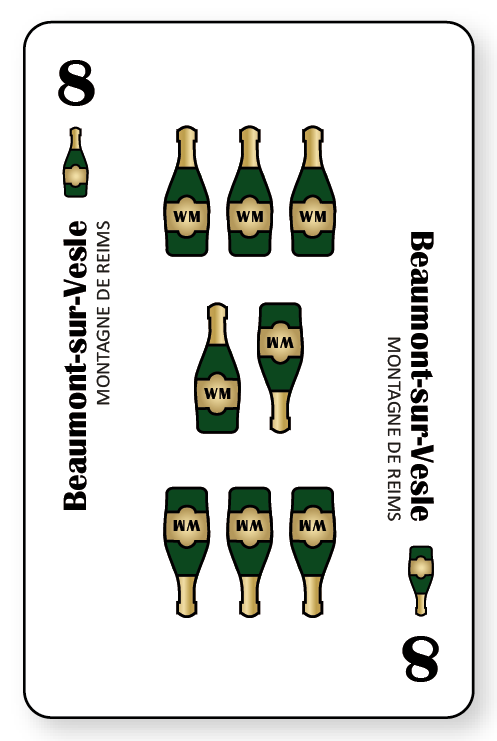
8 - Beaumont-sur-Vesle
€
€
Beaumont-sur-Vesle (Grand Cru, Montagne de Reims)
- Location: About 13 km southeast of Reims, in the Montagne de Reims.
- Vineyard area: Approximately 569 ha.
- Soil and terroir: Argillaceous limestone soils, offering good moisture retention and balanced grape ripening.
- Climate: Temperate continental with moderate oceanic influence.
- Grape varieties: Primarily Pinot Noir, with variable proportions of Chardonnay and Pinot Meunier.
- Wine style: Elegant and fruity Champagnes, with red fruit aromas and a refined tannic structure.
- Use in blends: Contributes finesse, fruitiness, and complexity to cuvées.
- Notable producers: Joël Vautier, Clos Virgile.
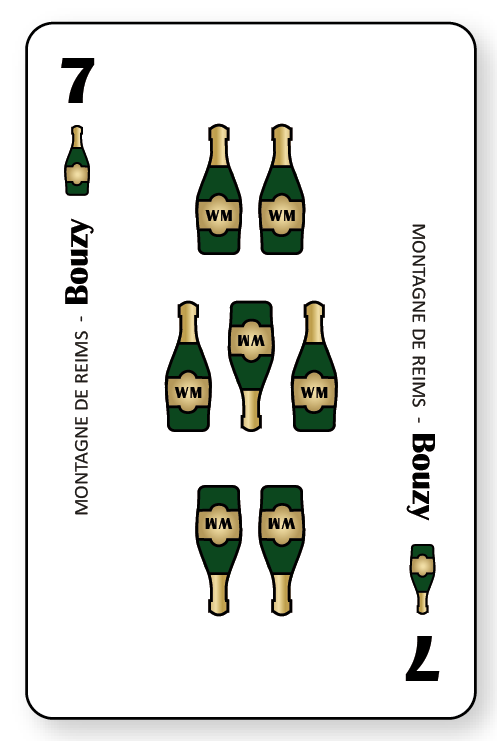
7 - Bouzy
€
€
Bouzy (Grand Cru, Montagne de Reims)
- Location: Situated on the southern slope of the Montagne de Reims, Bouzy is a wine village renowned for its Pinot Noir.
- Vineyard area: Approximately 11 ha.
- Soil and terroir: Limestone soils, promoting excellent drainage and optimal grape ripening.
- Climate: Temperate continental, with moderate oceanic influences.
- Grape varieties: Primarily Pinot Noir, with a small proportion of Chardonnay.
- Wine style: Powerful and structured Champagnes, with aromas of ripe red fruits, cherry, and raspberry, accompanied by spicy notes and bright acidity.
- Use in blends: Adds richness, complexity, and aging potential to cuvées.
- Notable producers: Pierre Paillard, Paul Bara.
6 - Louvois
€
€
Louvois (Grand Cru, Montagne de Reims)
- Location: Situated on the southern slope of the Montagne de Reims, Louvois is a picturesque wine village.
- Vineyard area: Approximately 1,217 ha.
- Soil and terroir: Argillaceous limestone soils, offering good moisture retention and balanced grape ripening.
- Climate: Temperate continental, with moderate oceanic influences.
- Grape varieties: Primarily Pinot Noir, with variable proportions of Chardonnay.
- Wine style: Elegant and fruity Champagnes, with red fruit aromas and a refined tannic structure.
- Use in blends: Contributes finesse, fruitiness, and complexity to cuvées.
- Notable producers: Laurent-Perrier (via Château de Louvois).




More products
5 - Mailly-Champagne
€
€
Mailly-Champagne (Grand Cru, Montagne de Reims)
- Location: Situated on the northern slope of the Montagne de Reims, Mailly-Champagne is a wine village renowned for the quality of its grapes.
- Vineyard area: Approximately 1,180 ha.
- Soil and terroir: Chalky and limestone soils, promoting excellent drainage and optimal grape ripening.
- Climate: Temperate continental, with moderate oceanic influences, allowing slow and even grape maturation.
- Grape varieties: Primarily Pinot Noir, with a small proportion of Chardonnay.
- Wine style: Powerful and structured Champagnes, with aromas of ripe red fruits, cherry, and raspberry, complemented by spicy notes and bright acidity.
- Use in blends: Adds richness, complexity, and aging potential to cuvées.
- Notable producers: Champagne Mailly Grand Cru, Bérêche & Fils.
4 - Puisieulx
€
€
Puisieulx (Grand Cru, Montagne de Reims)
- Location: Situated on the southern slope of the Montagne de Reims, Puisieulx is a small Grand Cru wine village.
- Vineyard area: Approximately 907 ha.
- Soil and terroir: Argillaceous limestone soils, offering good moisture retention and balanced grape ripening.
- Climate: Temperate continental, with moderate oceanic influences.
- Grape varieties: Primarily Pinot Noir, with variable proportions of Chardonnay.
- Wine style: Elegant and fruity Champagnes, with red fruit aromas and a refined tannic structure.
- Use in blends: Contributes finesse, fruitiness, and complexity to cuvées.
- Notable producers: Aurore Casanova, François Seconde.
3 - Sillery
€
€
Sillery (Grand Cru, Montagne de Reims)
- Location: Situated on the southern slope of the Montagne de Reims, Sillery is a Grand Cru wine village.
- Vineyard area: Approximately 920 ha.
- Soil and terroir: Argillaceous limestone soils, offering good moisture retention and balanced grape ripening.
- Climate: Temperate continental, with moderate oceanic influences.
- Grape varieties: Primarily Chardonnay, with a small proportion of Pinot Noir.
- Wine style: Elegant and mineral Champagnes, with white fruit aromas and bright acidity.
- Use in blends: Contributes finesse, freshness, and complexity to cuvées.
- Notable producers: François Seconde.
2 - Verzenay
Verzy
Verzy
€
€
Verzenay (Grand Cru, Montagne de Reims)
- Location: Situated on the northern slope of the Montagne de Reims, Verzenay is a Grand Cru wine village.
- Vineyard area: Approximately 420 ha.
- Soil and terroir: Chalky soils, promoting excellent drainage and optimal grape ripening.
- Climate: Temperate continental, with moderate oceanic influences, allowing slow and even grape maturation.
- Grape varieties: Primarily Pinot Noir, with a small proportion of Chardonnay.
- Wine style: Powerful and structured Champagnes, with aromas of ripe red fruits, cherry, and raspberry, complemented by spicy notes and bright acidity.
- Use in blends: Adds richness, complexity, and aging potential to cuvées.
- Notable producers: Pierre Paillard, Barbier-Rozé.
- Location: Situated on the southern slope of the Montagne de Reims, Verzy is a Grand Cru wine village.
- Vineyard area: Approximately 1,000 ha.
- Soil and terroir: Argillaceous limestone soils, offering good moisture retention and balanced grape ripening.
- Climate: Temperate continental, with moderate oceanic influences.
- Grape varieties: Primarily Pinot Noir, with a small proportion of Chardonnay.
- Wine style: Elegant and fruity Champagnes, with red fruit aromas and a refined tannic structure.
- Use in blends: Contributes finesse, fruitiness, and complexity to cuvées.
- Notable producers: Barbier-Rozé, Champagne Verzy.

More products
A (As / Ace) - Grand Cru
€
€
All text, photo, and video materials belong to their owners and are for demonstration purposes only. Please do not use them in commercial projects.